
Engagement Before Obedience: Why Your Relationship Comes First
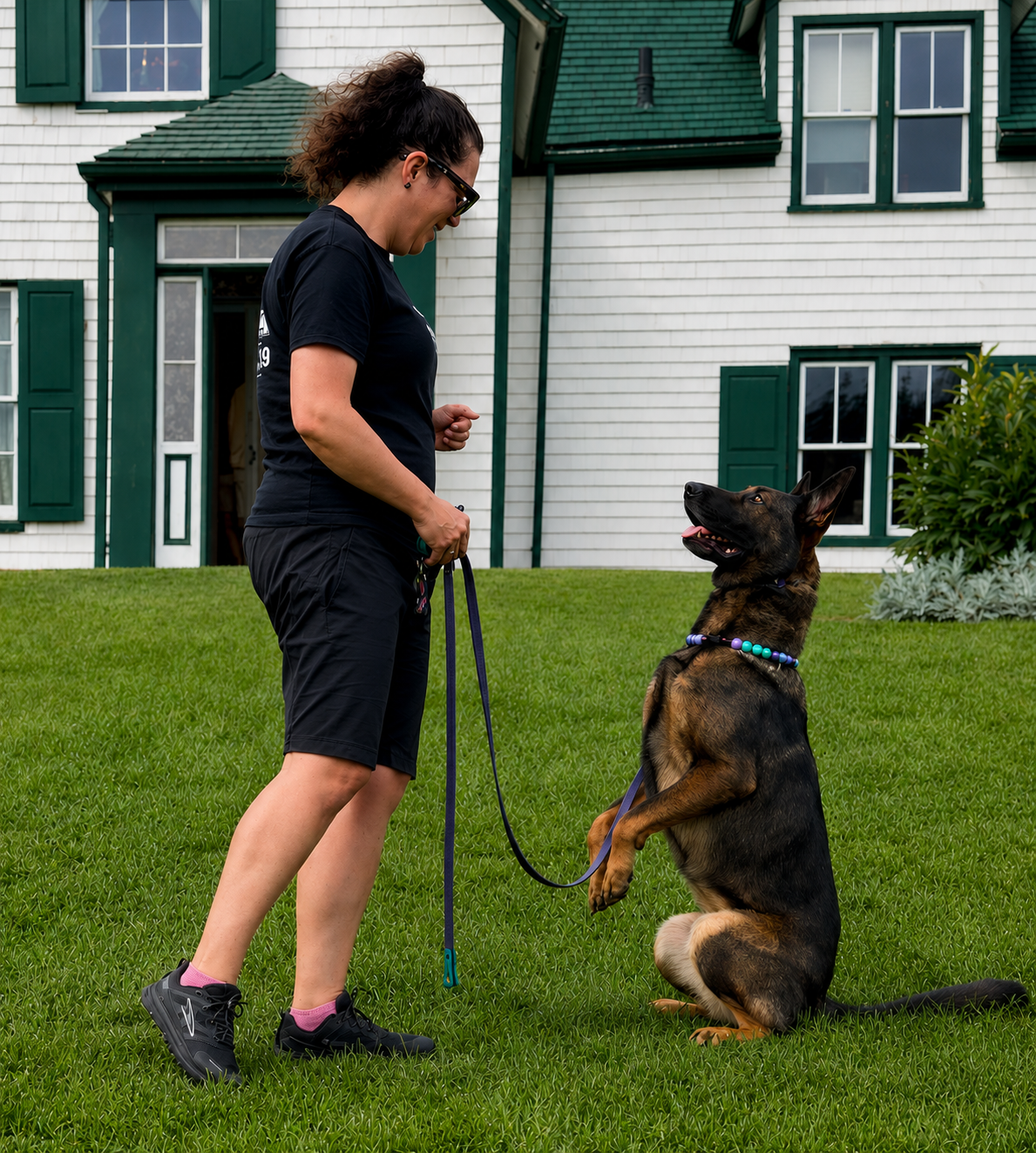
When people think about dog training, they usually think about obedience. Sit, down, heel, come etc.
Those things matter but before I worry too much about what a dog can do, I care about something else first: does this dog actually want to engage with the person holding the leash?
Because if your dog thinks every squirrel, smell, blade of grass and random person across the street is more interesting than you, repeating “sit” seventeen times isn’t going to solve the problem.
That’s where engagement comes in. If you don’t have that, your training will likely fail. Certainly plateau.
What Is Engagement?
Engagement simply means your dog is mentally connected to you. They’re checking in with you, paying attention to what you’re doing and interested in interacting with you.
That doesn’t mean your dog needs to stare lovingly into your eyes every second of the day. Dogs should absolutely be allowed to sniff, explore and be dogs.
What we want is the ability to get their attention back when we need it.
Think about the difference between a dog who is dragging their owner down the road completely oblivious to the human attached to the other end of the leash, and a dog who is exploring the environment but regularly checking back in.
That connection is engagement. And it makes everything else easier.
Obedience Is Hard When Your Dog Isn’t With You
You can teach a dog a really nice sit in your kitchen. You can teach a perfect down in your living room.
Then you walk outside and suddenly your dog appears to have never heard you speak before.
They haven’t necessarily forgotten their training. The environment has simply become more valuable than you are.
This is one of the reasons I don’t like looking at obedience as a collection of tricks we install into a dog. Training is communication between two individuals. If one half of that conversation has mentally left the building, you’re going to struggle.
Before asking for more obedience, sometimes we need to work on getting the dog back into the conversation.
Make Yourself Worth Paying Attention To
One of the easiest ways to build engagement is to become more interesting.
Use food. Play tug. Throw a ball. Move around. Change direction on walks. Be fun and celebrate when your dog voluntarily checks in with you. Knock off sounding tired, bored, annoyed or military when you train. Engage your dog! Reward them for choosing you when there are other things competing for their attention.
And don’t wait until you’re desperately trying to get their attention away from another dog, squirrel or exciting distraction.
Build engagement when things are easy.
Your backyard, driveway. A quiet walking trail. The boring end of the parking lot.
Then gradually practice around more distractions. That same balance- experiencing the world while still being able to engage with you- is a big part of thoughtful dog and puppy socialization.
Every time your dog learns, Hey, paying attention to my person tends to lead to good things, you’re putting money in the relationship bank.
Relationship Doesn’t Mean No Rules
This is an important distinction.
Putting relationship before obedience doesn’t mean letting your dog do whatever they want in the name of protecting your bond.
Healthy relationships have communication, expectations and boundaries.
I can play with my dog, reward my dog, explore the woods with my dog and genuinely enjoy spending time with my dog. I can also tell my dog no. I can interrupt behaviour I don’t want. I can expect them to follow through with something they already understand.
Those things aren’t opposites.
In fact, I think dogs thrive when we’re both fun and clear.
They know how to earn things they enjoy, they understand what’s expected of them, and they learn that their human is someone worth paying attention to.
Look Beyond the Commands
If you’re struggling with obedience, take a moment to look beyond the actual command.
Does your dog voluntarily check in with you?
Do you play together?
Do they enjoy training with you?
Can you get their attention without immediately reaching for the leash or repeating their name ten times?
Are you rewarding the moments when your dog chooses to engage with you, even when you didn’t ask them to?
Sometimes improving those things does more for obedience than drilling another hundred sits ever could.
The goal isn’t simply to create a dog who follows commands. It’s to build a dog who understands you, trusts your communication and actually wants to participate with you.
Get that relationship working first, and the obedience tends to become a whole lot easier.
Peace, Love & Dogs,
Trainer Sara
